Hantavirus, Yawn 🥱
Cruise ships, on the other hand …

If you lined up all of the viruses around us, they would span hundreds of millions of light years; for every star in the known universe, there are about 10 million viruses on Earth.1
That statistic was just to tickle your curiosity, as almost all of those viruses infect bacteria and Archaea, and as far as we know, won’t touch multicellular organisms like us. They are bacteriophages with tiny tails.
But I did wonder how long it would take me to climb on the Andes hantavirus bandwagon. I then read a pretty decent summary from Your Local Epidemiologist, and noted that even the crippled and bemused CDC had belatedly produced a HAN alert, so why bother? Really.2
Yeah, a few well-to-do Antarctic tourists have already died from hantavirus pulmonary syndrome.3 We’ll almost certainly see more cases from this outbreak.4 Some of them may well die. But basically, it’s mostly boring.
What amuses me is that if you line up the usual suspects when it comes to Getting It All Wrong About Viruses—Fox and that lot—they seem to be going pretty wild. Get a grip, chaps.
More broadly we could philosophise about how humans still don’t understand R0, which we discussed when we did Nipah virus.⌘ We still can’t work out that a death rate of 0.5% is far, far worse than a death rate of 20–40% where the former virus is spreading wildly, and the latter is sauntering along, seeking close contacts and taking time to leer at scantily clad women on the poop deck.5 But we humans are crap at numbers.
So instead, let’s talk about metasyntactic variables. Which are words that stand for something else, especially when you’re generalising. Notably in computer science. Words like ‘foo’.
I couldn’t resist this aside, you see
In 2024, the Quora Prompt Generator (Now Powered by Real AI, Really) asked the asinine question:
“What is the name of the horse in the movie “Horse with no name?”
Unwisely, I chose to answer. Rather than speculating about metasyntactic wossnames, I instead rambled on about a song with the most banal lyrics ever composed:
On the first part of the journey
I was looking at all the life
There were plants and birds and rocks and things
There was sand and hills and rings
We later learn that “The heat was hot and the ground was dry”. This sounds like a journey through the intellectual desuetude that is American Politics, only with more life.
But we haven’t arrived at the horse’s name yet, have we? I have a suggestion, but first, some background. Before you scroll down, though, here’s a security video from that cruise ship:
(Thanks, John)
What to call it?
In 1993, enthusiastic virologists found a new, rather nasty virus in the desert country near Four Corners. This is where Colorado, New Mexico, Utah and Arizona meet, in the Southwestern United States. The theory is that global warming an unseasonably warm winter and plentiful rainfall caused the western deer mouse population to explode. And this is the natural reservoir of the virus. More people breathed in aerosolised mouse poop.6 In that first year, 27 of the 48 people who developed (yes) hantavirus pulmonary syndrome from this new virus, died.
But what to call the virus? When it comes to naming viruses, we have a new, recent tradition of abandoning our rather awful old traditions.
Previously we named viruses after how they looked (coronaviruses have a little corona; arenaviruses look like sand; rotaviruses look like little wheels); their nastier manifestations (‘Yellow Fever Virus’ makes you yellow as it kills your liver; Chikungunya virus makes you bend up in pain, hence the derivation of the name from the Makonde root verb kungunyala, to become contorted; ‘Herpes’ is a Greek word that gave us herpetology, but also describes the way the herpes virus creeps across your skin); some we even named after people who encountered them, for example Duvenhage lyssavirus is a rabies-like virus that killed its first victim and took his name; Saffold virus was given its discoverer’s middle name; JC and BK are patients’ initials.
But the most popular naming convention was to blame entire countries—the “Spanish ‘flu” , “German measles”, “Venezuelan equine encephalitis”, “Japanese encephalitis virus”, “Sudan ebolavirus”, “Australian bat lyssavirus” etc.
Now, newer viruses should get descriptive names that are long, boring and banal. The Severe Acute Respiratory Syndrome CoronaVirus-2 is maleficently long-winded, so naturally everyone calls it “the COVID virus”, which is wrong. Whatever. We have MERS, and Mpox, lest we offend anyone.
Nobody knows where dengue got its name.
But back in the 90’s and before, we often sought to associate viruses with the places they were first found. Ebola is a river in the Congo; Marburg is a town in Germany where a monkey virus got loose; West Nile virus was found in, well, the West Nile district of Uganda7; Zika virus is named after the Ziika Forest in Uganda; Crimean-Congo haemorrhagic fever virus even manages to blame two vast areas.
.jpg)

Sin nombre?
That would be a great name for a horse with no name, wouldn’t it? Words have power.
There are also people out there with their heads screwed on properly, who know this. So in 1993, the Navajo Nation Council, who are quite canny, voted 52-0 against naming the new virus “Muerto Canyon”. “Four Corners” then? Nope, we’re not daft.
So the virus without a name became “Sin Nombre”. Something like a metasyntactic variable. Foo. Bar.
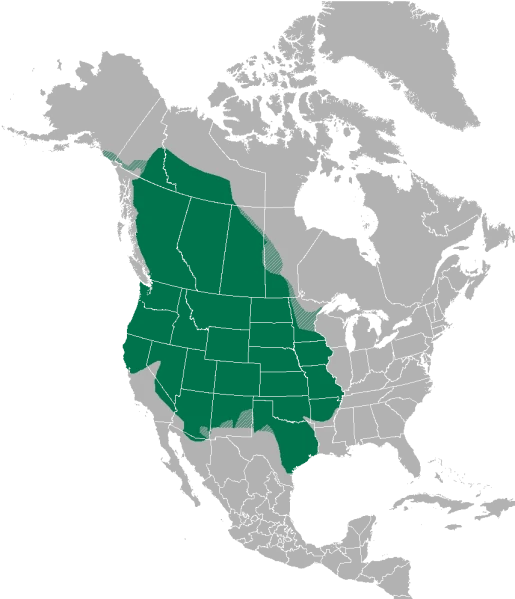
And of course, the Navajo Nation Council were quite right. The distribution of the western deer mouse is shown above. No reason to finger Four Corners, is there? You could have called it the “West-of-the-Mississippi virus”. Just one of a multitude.
There are tons of them
Let’s not even mention Oropouche virus, Rift Valley fever virus, Junin, Machupo, Lassa, Kyasanur Forest disease virus, Guanarito, Sabiá, Whitewater Arroyo, Chapare, Lujo,8 Borna, Taï Forest, Murray Valley, Thogoto, Dhori, Bourbon, Hendra, Nipah, Menangle, Aichi, Vilyuisk, Seneca Valley, Syr-Darya Valley, Yaba, Colorado tick fever virus, Kemerovo, Mokola, Ross River, Semliki Forest, Sindbis. The list is almost endless. There’s a lot of viruses out there.
Oh, and, of course, hantaviruses, named after the Hantan River in South Korea. Where Hantaan virus (aka Orthohantavirus hantanense) causes haemorrhagic fever with renal syndrome.9
So why panic about a single, known virus that will just kill a few and probably then die out, ‘cos its R0 is likely smaller than Donald Trump’s tiny ********* ****.10
_IMO_9378462;_in_Split,_2011-10-17_(2).jpg)
Cruise ships, on the other hand (😱)
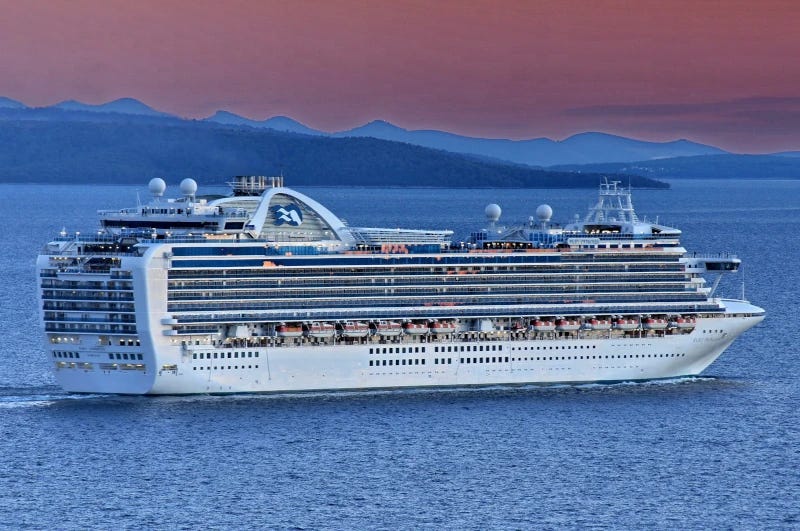
Well into my seventh decade now, I will never, ever understand why people go on Cruise Ships. Perhaps it’s just me, but the idea of being cooped up with a herd of other humans—and no escape—on something called, f’rinstance The Ruby Princess seems to me like Purgatory on a bad day.
Conversely, all respiratory viruses will tend to thrive in this sort of environment. Especially a novel, contagious virus, with a high mortality rate in older people. The sort of people you’d find on, well, cruise ships. SARS-Cov-2, a virus that likely cost the global economy over ten trillion US dollars, about 10% of annual global GDP, and just keeps on giving.⌘
I see that in a May 7 post on the arse-end of social media—Facebook—the author claims that “hantavirus infection is a side effect of vaccination against COVID-19”. This will surely be preserved for eternity as a tribute to the gullibility of people who still use Meta in any form. Reuters even saw fit to publish a refutation.
At the other end of the spectrum, virologists and epidemiologists got together in 2018 and started to set up the Global Virome Project. This was to run for ten years, with the basic goal of finding and categorising new viruses. Their thinking was straightforward:
There are over 1.5 million different viruses in mammals and waterfowl, most of which we haven’t characterised. It’s likely that between 600 and 800 thousand of these have zoonotic potential. They may spread to us and kill many or even most of us.
Sequencing these viruses and assessing their risk to humans would likely cost about $1.2 billion, but knowing the enemy is better than $10 trillion blown away and 30 million killed by a pandemic that could potentially be contained.
Ironically, their efforts, planned to start in early 2020, were delayed by COVID-19, and now there is, uhh, diminished political appetite for funding.11 There’s still a desultory page up at UC Davis, but that’s about it.
People continue to spend a ton on cruise ships, though — US$72 billion in 2025. Perhaps this is just Nature’s way of finally sorting out the moderately well off and slightly rich.12
You do wonder when the next virus—a substantial threat, this time—will pop up. And where. Nobody knows, but the cruise ship environment does seem rather enticing, doesn’t it? I do however know one thing for sure: we won’t be prepared for it.
As they say in the military “FUBAR”. There’s nothing metasyntactic about that at all. It’s just our current reality.
My 2c, Dr Jo.
⌘ This symbol is used to indicate posts where I’ve discussed the flagged topic in more detail.
During proofreading by ChatGPT, it suggested the “attention span” quip about Donald Trump. Heh.
There is a bit more than a mole of stars out there (about 1024 of them), but reliable, recent estimates put the number of viruses on Earth at the literally astronomical number of over 1031. More than 90% are thought to reside in sea water. If you lined up their DNA, this would extend for billions of light years.
And if I’ve f—ed this up and Andes turns out to spread more enthusiastically than it ever has since it was discovered 30 years ago, you’ll make sure I eat endless supplies of humble pie. It is worth noting that despite what seemed to be pretty clear person-to-person spread in Argentina in 2018 and even with compelling clarity back in 1997, an ‘expert review’ written in 2022 said “Nah!”. Perhaps these people should talk to one another? There are instances of apparent ‘superspreaders’ in confined environments, but the general impression we get is one of low transmissibility, especially when we’re on to it promptly, as seems to have happened here. The long incubation period and apparent lack of asymptomatic spread are both likely boons, too.
Andes doesn’t seem to cause the bleeding and kidney failure we see with old-world hantaviruses.
I’d just written this and then saw the slightly pregnant ‘weakly positive’ US case, discussed well by Dr Zachary Rubin. And a French woman who disembarked in Tenerife on Sunday has also tested positive.
To be fair, in that outbreak in Epuyén, characterised by a few superspreaders and massive social gatherings, the R0 was calculated at just over 2. This is unlikely to be representative.
Or saliva. A bite or scratch will also transmit this sort of virus, which is why fondling field mice is less than wise.
West Nile has an enormous range of hosts—it’s been detected in mosquitoes, hundreds of species of birds, amphibians, and reptiles; as well as humans, horses and many other mammals, which are dead-end hosts. It too is spreading as climate change takes hold. As an interesting aside, at least a dozen viruses are named after places in Uganda.
A portmanteau of Lusaka + Johannesburg.
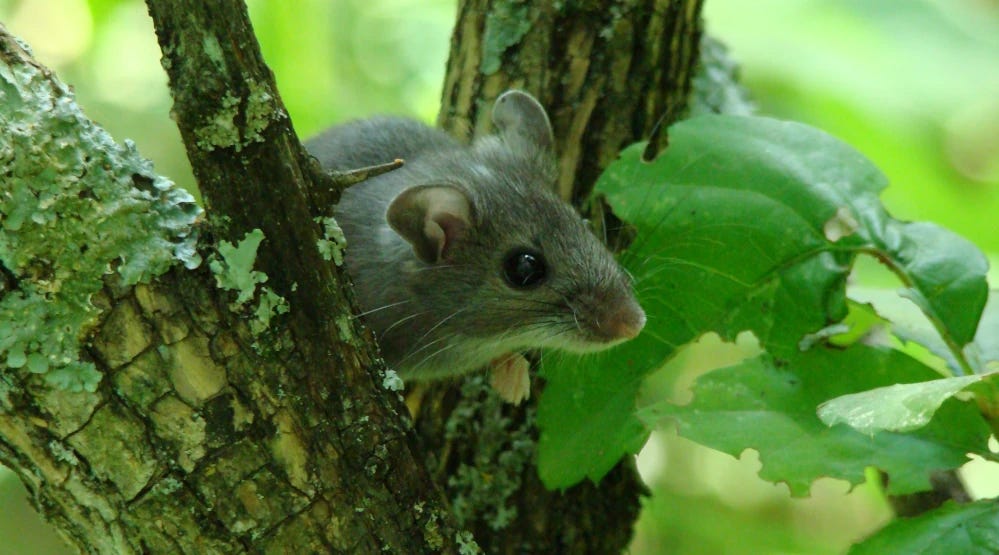
And for those who are (a) meticulously into footnotes and (b) grumpy because I put a picture of the western deer mouse at the start, knowing that it doesn’t transmit the Andes virus, yes, in Argentina Oligoryzomys longicaudatus is responsible; other carriers of Orthohantaviruses there are Akodon montensis and Oligoryzomys nigripes. For Hantaan, it’s Apodemus agrarius, the striped field mouse.
Attention span.
And, as demonstrated in the Middle East recently, US politicians have worked out that if you don’t care about devastating the long-term world economy while your friends profit from leaked information that allows them to manipulate the stock market, who needs to know your enemy, right? Just throw bombs and profit away.
Really rich people like Peter Thiel, Elon Musk and the Koch family seem untouchable, so they’re left to find their own gloomy self-destructive exits, likely taking much of humanity with them. Maybe, in a dark counterpoint to Alfred Nobel, they’ll establish a Global Extinction prize, adjudicated in Saudi Arabia.
Footnote number 10 made me laugh out loud. I like your style.
And I may be part of the demographic you characterize in cruise ships, but I will never board one.
Thanks for the details on this “new” virus
I used to live in the United States of Dystopia and well remember the outbreak of the Hantavirus on the Navajo Reservation. As for cruise ships aka petri dishes on the ocean, they just keep building more and more ships that can carry over 6000 passengers. That is 6,000 more people than I can handle. Just stick me on a dinghy on the Pacific. I probably won't survive but I won't catch a virus, get a major case of the shits or go crazy because people. Thanks for the all the very interesting info and putting things into perspective.