Nostrums
Longevity Part III: Big Business


On the twelfth day of Christmas, my true love sent to me
Twelve young men’s plasma
eleven types of hormone
ten stem cell treatments
nine herbal medicines
eight nat'ral phenols
seven micronutrients
six horsetail extracts
fiive eeegg whites,
four grams of garlic
three boron tablets
two dried sharks
and a megadose of vitamin C.
The chances are, if something exists in nature, it’s been punted as life-prolonging medicine. We’ve already found that given the complexity of ageing, it’s unreasonable to expect side-effect-free salvation from supplements.⌘ We also met some sucker billionaires.⌘
Next, the hucksters. Snake oil salesmen. Purveyors of peculiar pills and potions. And here I have a problem. It can be so difficult to determine whether someone really believes, or is simply a cynical opportunist. In the end this may not matter much, so I tend to ask two main questions:
Are they coining it from dubious nostrums?
Is there evidence they faked the ‘science’? Is there even Science?⌘
A further caution is that it may be wise to use the word ‘alleged’ rather a lot in what follows. Americans are so litigious. Here though, we’re intent on criticising claims and patterns of behaviour; the individuals are almost peripheral to these bigger issues.
The man with the mebufotenin tattoo
As a doctor, my worst interactions (and I have very few of these) arise not from people who are mad, but from people who are fanatical. Mad people are easier to reason with. Among the most fanatical fanatics are those clutching a long list of ‘supplements’.
If I meet someone who takes a list like the following one, I make sure that the room is brightly lit, there are people around, and that I have meticulously planned an escape route. Then only do I pull up a chair, listen carefully and nod sympathetically in a non-confrontational manner. Here’s that list:
calcium alpha-ketoglutarate, nicotinamide riboside and nicotinamide mononucleotide, taurine, nordihydroguaiaretic acid, aspirin, ashwagandha, sulforaphane, cocoa flavanols, coenzyme Q, DHEA, NAC, hyaluronic acid, L-tyrosine, genistein, vitamin C, calcium, zinc, flax seed extract, horsetail extract, shark and mollusc powder, turmeric, garlic, ginger root, melatonin, lithium, resveratrol, metformin (of course), creatine, beta alanine, acarbose, boron, L-lysine, lycopene, proferrin, spermidine, and zeaxanthin.
I may have left out a few. We’ve previously met the chap who does this lot every day, as someone who also received plasma infusions from his son. Bryan Johnson, venture capitalist whose adventures really became exciting when he sold Braintree to PayPal for $800 million in 2013. It is said that he spends $2 million every year just on supplements, gulping down over 100 pills a day.
That’s not normal behaviour by most metrics; more disturbing however may be the non-disclosure agreements he makes both employees and girlfriends sign, and his alleged workplace misconduct.1 But let’s get back to those supplements. They’re part of his brand. His motto: “Don’t die”. His schtick: ‘Project Blueprint’. He has a single forearm tattoo.
I think the answers to my questions here are pretty easy: he aggressively markets his ‘Blueprint’ range of supplements, and there is no Science.⌘ In fact, if you watch his videos, pretty much everything he does is product placement. Even if he actually does take all those things, I have no doubt he makes vastly more than $2M from these efforts. His website even sells extra virgin olive oil at $69 a pop, labelled ‘Snake Oil’. On this point, I can’t call him dishonest.2
“But it works”
There is no therapy, however shonky, that doesn’t have attestations of excellence. Chances are, there’s also a paper somewhere that supports its use. Years ago I wrote up eight New Zealand patients with lead poisoning from Ayurvedic medicines, but yes, you’ll find any number of articles claiming the safety and efficacy of Ayurvedic ‘organometallic bhasmas’. Some even appear in PubMed.3
It becomes tiring pointing out (repeatedly) that the plural of ‘anecdote’ is not ‘evidence’, that good Science is hard to do, and that glib results are almost always wrong. It’s even more tiring to work through fake papers written by charlatans, and systematically debunk them, especially now that they are AI-boosted. It is terminally exhausting trying to reason with fanatics who truly believe in the potions foisted on them, especially if they’ve seen coincidental or placebo benefits.
An easier way
There is an easier way. You’ll find that (as with Bryan) the Rasputinian weird shit tends to cluster around certain individuals. Let’s meet a few candidates. I’ll start with Aubrey de Grey, because he presents such a large target. You’ll recall that he received millions of dollars in sponsorship from Peter Thiel. This involved rebranding David Gobel’s ‘Performance Prize Society’ as the ‘Methuselah Foundation’.
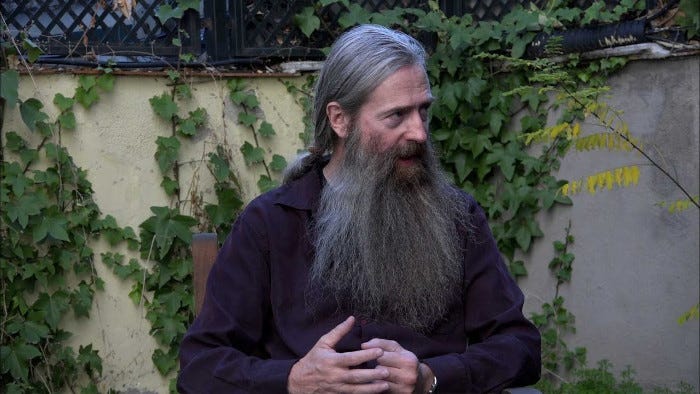
Sigh. Until fairly recently, the eponymous Dr de Grey (shown above), was the poster-child (or poster old man) for anti-ageing expectations. At one point, he enthusiastically endorsed rodent quilting studies. But in 2021 he was removed from the non-profit SENS Research Foundation4 due to alleged interference in his alleged pimping of young female SENS employees:
SENS funded much of my undergraduate and graduate work, and as such I was often paraded in front of their donors. The role of my attractiveness in discussions with donors (almost always older men) was made explicit by SENS executives.
At one such dinner, I was sat next to Aubrey by a SENS executive. I was told to keep him ‘entertained’; Aubrey funneled me alcohol and hit on me the entire night. He told me that I was a ‘glorious woman’ and that as a glorious woman I had a responsibility to have sex with the SENS donors in attendance so they would give money to him.
I left that dinner sobbing. It has taken me years to shake the deep-seated belief that I only got to where I am due to older men wanting to have sex with me.
It’s difficult to move past this. But fortifying myself with antinauseants, I note that De Grey is perhaps best known for punting “longevity escape velocity”—that we won’t die because each life-prolonging advance will get us to the next stepping stone.
The problem is, there’s not a shred of evidence to support his assertions. He has a string of unsuccessful predictions.5 This hasn’t stopped his cult-like supporters. He in turn supports the ‘Alliance for Longevity Initiatives’, established the ‘Healthspan Action Coalition’ overseen by Bernard Siegel, and in 2023 hosted a longevity conference in Dublin, with guest speakers that included David Sinclair, Brian K Kennedy (Ponce de Leon Health6) and George Church (funded between 2005 and 2007 by the Jeffrey Epstein VI Foundation).

They all seem to know one another
Especially in our current climate, where an elderly serial sexual predator not only has a cult following of 70 million, but is ensconced in the White House, it may be naïve of me to expect that being associated with someone who (allegedly) preyed on young women doesn’t look good on the jolly old CV.
But there is still hope. Ask Peter Mandelson (above), the UK’s recently departed ambassador to the US, who may just be starting to regret his ongoing association with his “best pal” Jeffrey Epstein. Ask Sarah Ferguson. But let’s sharpen our focus. Rather than emphasising association, why not look at actual research performance?
I’ll start with Australian David Andrew Sinclair. I’ve always been struck by his youthful appearance, however if you look carefully at his forehead in videos across the years, it seems to have lost its ability to wrinkle. Why would someone with the secrets of longevity apparently resort to botox?
What are those secrets, anyway? Sinclair’s lucky (for him) break came in 2004, when he met philanthropist Paul F Glenn who promptly donated $5 million to establish a lab in his name, with Sinclair as the founding director. Sinclair was very much into sirtuins, and started Sirtis Pharmaceuticals (with a bunch of other chaps), which he sold in 2008 for a whopping $720 million to GSK. Who ended up hugely regretting this purchase, as it went nowhere, and was shut down after five years.
Oops. It turned out that his basic research was flawed. Sirtuins are enzymes in cell nuclei that modify gene regulatory proteins, some of which may be involved in cancer and ageing. GSK bought Sirtis on the basis of his compound SRT501, which was thought to activate sirtuin 1. It doesn’t. Leonid Schneider points out that a fair bit of Sinclair’s output appears dodgy.
Another one of his ventures (Genocea Biosciences) went belly up in 2022. Yet another company CohBar was delisted from NASDAQ—apparently a shell company. But no worries, as a tenured professor at Harvard, he can push on. He co-founded The Academy for Health and Lifespan Research but resigned as its president after the storm around his punting a beef-flavoured chew with secret ingredients (perhaps NAD boosters) that he claimed reversed ageing in dogs.
Almost as an aside, the anti-ageing startup Elysium Health founded by Leonard Guarente (Sinclair’s former boss, who has garnered a litany of retractions) sells Sinclair’s patented NAD supplements under various cute names. Which brings us to another fad. NAD is nicotinamide adenine dinucleotide, used within cells for energy transfer. Unsurprisingly, if you pump someone full of vitamin B3 (nicotinamide) and related substances, their NAD levels may increase a bit. And that’s where it stops. Sirtuin 1 needs NADH, as do many other enzymes, but depletion is unrelated to ageing. This hasn’t stopped a huge variety of companies from punting “NAD+ supplements”.
More blood
Remember Tony Wyss-Coray, the Stanford rodent quilter I mentioned recently? Together with Saul Villeda, in 2014 he formed a company called Alkahest, on the basis of yes, ‘young blood’. His magical young blood components of course differed from all of the other magical young blood components of competing companies. Whatever. The global plasma giant Grifols rapidly made a large equity investment and later acquired the company for $146M, in 2021. And how did this turn out? Well, Er. Um.
Part of the problem may be the ‘sloppiness’ in some of the papers with Wyss-Coray’s name on them. For example, in a 2006 PNAS paper, PubPeer notes:
… one image appears to represent a mouse at three days and at five days. This seems unlikely.
As Leonid Schneider and Smut Clyde point out, this is just one of many teensy little problems with their work. Another is co-author Eliezer Masliah, now former director of the $2.6 bn division of neuroscience at the National Institute on Aging. ‘Former’ because of evidence of image manipulation across 132 of his research papers. They all seem to know one another.
Also, Harvard
Another spinoff from the murine centipede experiments was ‘GDF11’. This led to the founding of Elevian by Harvard professors Amy Wagers, Rich Lee and Lee Rubin. Hang on! Isn’t that the same Wagers who had two papers retracted for fraud? One in Nature, and another in Blood.
No worries, it was (allegedly) their postdoc student who was badly supervised to blame. Oh! And Wagers’ GDF11 results aren’t reproducible. It may do the opposite. Researchers still argue about its ‘senolytic’ and ‘antioxidant’ properties. Which brings us to ...
Health warning: Contains Antioxidants
To evaluate ‘antioxidant’ claims you need three insights. The first is in the heading above. Pretty much wherever it’s been looked at in humans, antioxidant supplementation has been shown to be ineffective or harmful. The promises are enticing: antioxidants are chemicals that neutralise free radicals. Reality tells us something different. Even in mice, antioxidants accelerate the growth and metastasis of cancer.
The second is a bit more subtle: oxidative eustress. Cells use reactive oxygen species too, and too little can be as bad as too much. There’s a complex balance, and if you dick around with it, you’re likely to break it.
The third is wild. Some claimed ‘anti-oxidants’ are actually pro-oxidant at levels you get with the recommended dosing. If something is claimed to ‘increase anti-oxidant defences’, always ask whether it does this by causing oxidative stress. This is true for lots of claimed anti-ageing substances: sulforaphane from broccoli, and polyphenols like curcumin and resveratrol. Aww, let’s take a moment to look at the mother of all lies.
Resveratrol
Did I mention that Sinclair’s SRT501 is derived from resveratrol? Well, now you know. Back in Part I,⌘ we mentioned the TOR pathway in C. elegans. TOR (‘target of rapamycin’) inhibits TOR complex 1 and extends worm lifespan. It is possible that resveratrol also affects this messy can of worms. However, of all the ‘wonder drugs’ we’ll encounter, resveratrol7 may resonate most strongly with fraud.
Back in 2008, an anonymous tip-off led to an investigation of the work of Professor Dipak K Das at the University of Connecticut. The resulting 60,000 page report detailed 145 counts of data fabrication and falsification. This underlines the ease with which so many ‘researchers’ in the past have used Photoshop to doctor their western blots.⌘ At the time David Sinclair denied any knowledge of Das; he may have been economical with the truth.
Are you now tired?
The problem with debunking bad anti-ageing ‘research’ is that there’s so much of it. You grow old doing this. So I will resist the temptation to dive into cellular reprogramming and ‘epigenetic therapy’ here. I’ll hold back from ‘immune rejuvenation’ and probiotic speculation. Hyperbaric oxygen, dasatinib and quercetin anyone? Nope. Even the Indian-Swiss Kern sisters, who took that fluorescent blue dying nematode⌘ mentioned in my first ageing post and ran with it to produce ‘LinkGevity’ will have to wait. Tempting, but unlike Bryan Johnson, there’s only so much shit I can ingest in one sitting. So let’s end off.
The onus
One thing still surprises me. I fairly often encounter people who met someone in a park who sold them something “guaranteed to give a safe high”. They believed and trusted the vendor. I usually see them on my ward, after they’ve been discharged from intensive care.
Their subsequent rocky course is however not the thing that surprises me. I am surprised that the exact same people will often be hugely suspicious when offered a medical product that has been manufactured under Good Manufacturing Practices (GMP), rigorously tested in multiple clinical trials, and then agonised over by paranoid people like myself, before being prescribed appropriately, taking into account the balance of risk and benefit.
As I see it, if you take some dodgy substance because you just believe, that’s substantially on you. But I do have suggestions about how you can spot the BS. Here they are:
Is the person punting the product known to be a snake oil salesman? That’s often all you need. Fool me once.
Cultivate appropriate skepticism. Is GMP used? Do the claims even make sense? Do you know enough to evaluate them well?
Next, filter out the obvious hype. Are the claims extravagant? BS. Does it sound ‘too good to be true’? BS. Is the ‘evidence’ mostly or exclusively anecdote-based? BS. Are there ‘absolutely no side effects’? BS.8
Okay, so there are actual studies of the product. Look at these. Are they only non-human studies? Avoid. Are they in humans, but small and uncontrolled? Avoid. Do they use proxy end points9 rather than hard, real-life endpoints? Avoid.
Eschew the glowing review. Instead look for vigorous criticism by smart people who understand the all-important study context, as well as things like cheating, confounding, analysis of change over time, and forensic statistics. Science it,⌘ dammit!
If the drug passes all of these, it may just be good. Don’t just trust the vendor. Most customers buy based on emotion. But you’re smarter than that, aren’t you?

( Eugène François de Block, “Interior with family around a dying man”)
A terminal question
One question remains: “Why are people so easily suckered into believing in fake age-prolonging nostrums?”
I think the answer tells us a lot about our current world society, and the powerful but flawed people it produces. As an ex-ICU doctor who now looks after many dwindling old people, I have seen scores of people die. I am fortunate that I work in New Zealand, where almost all of those people and their families have realistic views of death. But it strikes me that, around the world, people are becoming insulated from death.
Death used to happen mainly at home. It was real and organic. The extended family would often gather round the bed of the dying person, and so they became familiar with natural death. In ‘developed’ societies we have now made death unnatural, something that happens in hospital (or even in an intensive care unit), something that is clinical and sanitised. This has transformed Death into an implacable enemy, who must be fought off at all costs.10
The opposite of death is not life; the opposite is wild proliferation: think ‘greed’ and ‘cancer’. Death is part of the cycle of life. It’s not too surprising that people who lack this understanding and are full of inappropriate fear will take quite unreasonable steps to push their fear to one side. Or try to.
I have what might be termed a ‘Pratchett’ view of Death. Implacable, surely, but also someone who brings surcease from pain, someone who commands respect, but not fear. Death is a natural and important balancer in the cycle of growth, and in maintaining our ecosphere.
Would that seekers after immortality realise this.11
My 2c, Dr Jo.
In my next post, we move from the limited field of longevity to a more general Explosion of Quackery.
⌘ Denotes one of my prior posts on Substack.
I do also wonder about the dilated venous collaterals over his lower abdomen.
I am tempted to speculate whether (a) some residual speck of honesty compels these chaps to indicate their deception; or (b) they get pleasure from overtly lording it over the marks—knowing that the latter will still subscribe. My vote is for (b).
If you check out Part-I of the Ayurvedic Formulary, it has pages for Trivanga Bhasma and Naga Bhasma. Yep. Lead. Ayurvedic Pharmacopoeia Part I Volume VII Monograph 14 Sauvīrāñjana recommends PbS for eye diseases, bleeding disorders, obstruction of menstrual flow, menorrhagia and ironically, viṣa doṣa—disorders due to poison. You will commonly find Ayurvedic practitioners on the Web recommending trivang[a] bhasm[a] for diabetes. It’s 30% lead.
SENS was started by de Grey. It stands for ‘Strategies for Engineered Negligible Senescence’. Not unsurprisingly, its main funder was for some years the Methuselah Foundation.
Like Peter Thiel, he’s hedging his bets, and has signed up to be cryonically frozen.
Who seem to assert that their alpha-ketoglutarate is better. Given that Juan Ponce de León’s ‘search for the Fountain of Youth’ is almost certainly a myth, their name seems to fit perfectly.
Claimed to be the ‘magical’ ingredient in red wine, before we realised there’s no safe dose of alcohol.
Even placebos can have side effects (‘nocebo effects’)!
Proxy end points measure the wrong things, for example intracellular NAD+ concentrations or alleged measures of ‘DNA ageing’, rather than, say, life extension.
Ironically, we are now much better than we were at ensuring good relief of pain and other symptoms in dying people; it’s just that often this doesn’t happen in an appropriate setting.
I can’t help but fantasise that some of the opportunists I’ve described above will ultimately be visited by the Death of Rats (aka ‘The Grim Squeaker’), even if it’s in an alternate universe. It would seem only appropriate. Especially for the rat quilters.
Companies and individuals have finally learned that to make the most money on a product, you focus on and sell to the majority. And they know that the majority aren't too bright, and that the majority would rather believe anything than learn and think. So as a society, we mostly get nostrums, stupid books, stupid movies/tv shows, and political leaders. Ah, well.
As an aside to this topic but germane to many of your other posts, here’s an AI update from a couple of expert sources that further corroborates your observations: https://substack.com/home/post/p-174643816